(Please watch the above video before reading on)
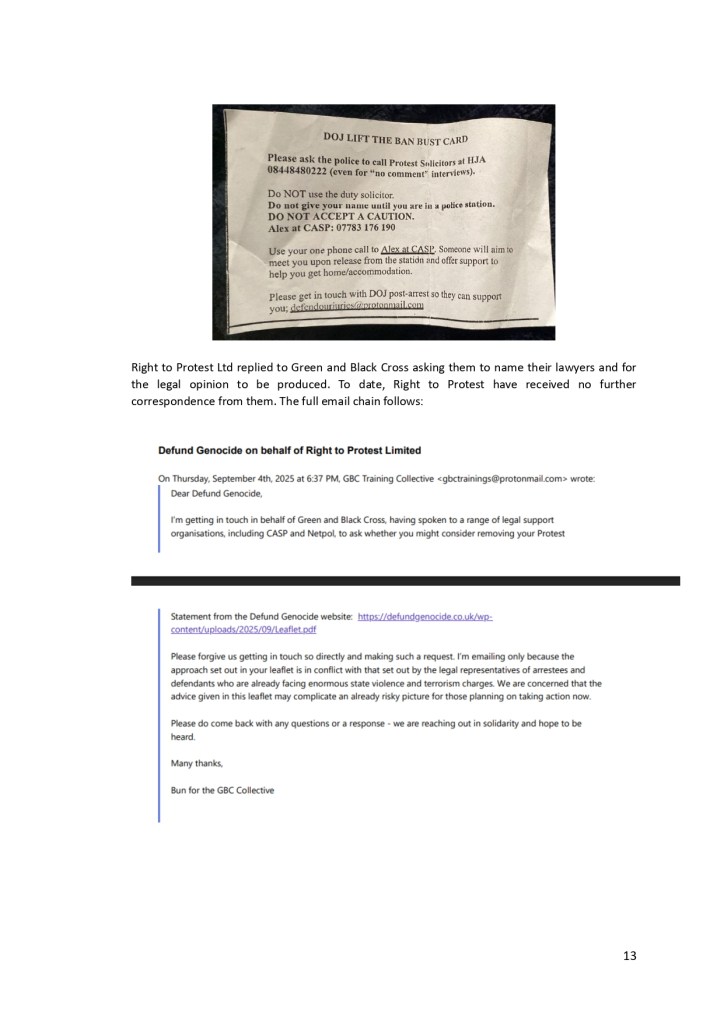
We at Right to Protest are increasingly concerned that the Defend Our Juries (“DoJ”) campaign is not leading people into a protest strategy aimed at symbolic arrest, but into one that is highly likely to produce terrorism convictions. DoJ claims it is organising lawful protest against the proscription of Palestine Action as a terrorist organisation, by encouraging people to hold signs stating: “I oppose genocide. I support Palestine Action.” DoJ’s claim is simply that with so many people defying the law, the ‘system’ would not be able to cope with so many arrests and the government would have no choice but to ‘lift the ban’ and de-proscribe Palestine Action.
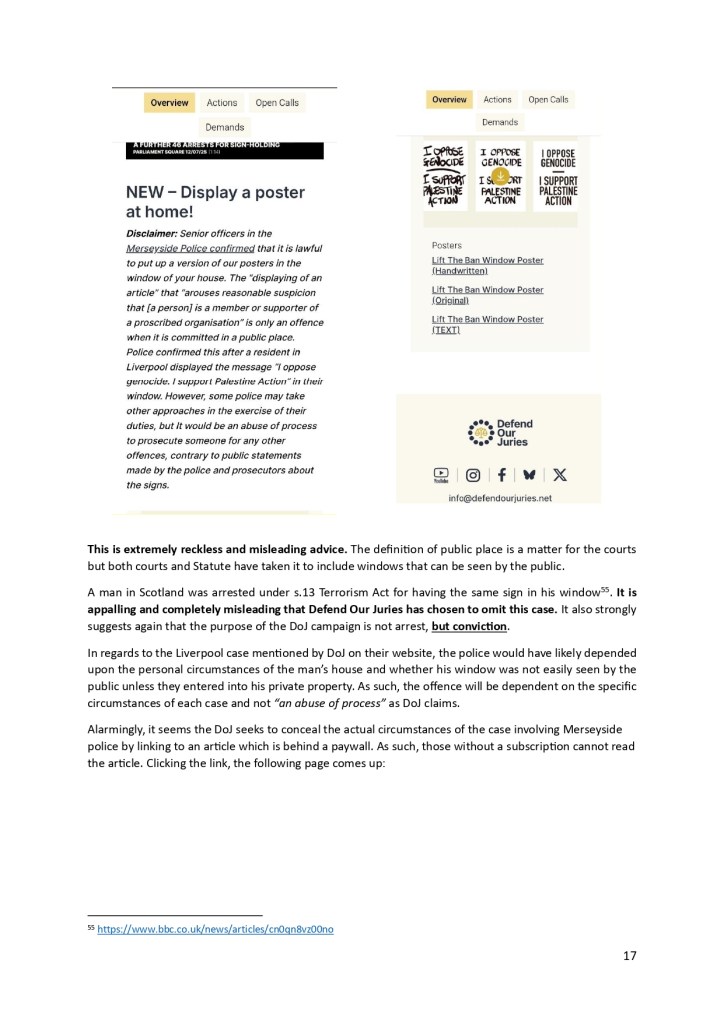
The legal problem with this tactic is obvious. Protest for de-proscription is lawful; public support for a proscribed organisation is not. Section 13 of the Terrorism Act 2000 criminalises displaying material that arouses reasonable suspicion of support for a proscribed group. Encouraging thousands of people to display those words in public is therefore not a protest tactic aimed at arrest; it is a tactic almost guaranteed to produce convictions under one of the most draconian areas of UK criminal law.
The High Court’s Judgment on the Proscription of Palestine Action (R (Ammori) v SSHD)
On 13th February 2026, the High Court produced its judgment on the proscription of Palestine Action by then Home Secretary, Yvette Cooper. Despite ruling that the proscription of Palestine Action was unlawful, the High Court nevertheless kept the ban in place until the conclusion of the government’s inevitable appeal. This means that though nominally unlawful, in actual fact, it remains in law and practically unlawful until the Court of Appeal makes its decision on the matter.
This means that expressing support for Palestine Action still remains a crime.
The High Court also addressed in no uncertain terms, its view on DoJ’s actions, and has made its position on this issue unmistakably clear: DoJ’s tactics had no impact whatsoever on the Court’s decision. The judgment states:
“There are two further points that also go to the general extent of the interference with Convention rights consequent on the proscription decision. One concerns the actions taken since proscription referring to Palestine Action that have led to many arrests. The various forms this action has taken are well known. Immediately following the proscription decision there were large protests. More than 2,000 people at these protests were arrested, primarily on suspicion of committing the offence under section 13 of the 2000 Act. The vast majority of those arrested had chosen to hold signs which read, ‘I oppose Genocide, I support Palestine Action’. We attach little weight to this when it comes to assessing the extent of the interference with Convention rights in this case. All those holding such signs either did or ought to have realised that what they were doing was showing support for Palestine Action. It was or ought to have been obvious to all concerned that such ‘carefully worded’ placards were carefully worded only to the extent of sending the message that the person holding the placard was expressing support for Palestine Action. What happened on these occasions was not evidence of difficulty or uncertainty in respect of what actions could be taken following the proscription of Palestine Action. Rather, it was evidence of calculated action.”
This judgment destroys the central premise being used to justify the campaign. DoJ claims these arrests will force the government to lift the ban. The High Court has already said the opposite: these arrests carry “little weight.” Yet despite this, DoJ organised another mass demonstration on 11 April 2026 in which more than 520 people were arrested for the same conduct. If the courts have already made clear that such arrests do not assist the legal case, and if an appeal is already underway, the obvious question is: why continue encouraging people into legally perilous and legally pointless arrests? If the genuine objective is to lift the proscription, the rational course would be to allow the appeal process to run its course. Continuing to funnel supporters into predictable terrorism offences – as confirmed by the High court – serves no strategic or legal purpose and simply exposes large numbers of ordinary people to life-altering criminal consequences.
We believe that the evidence suggests that DoJ is not a true campaign to Lift the Ban on Palestine Action, but is designed to funnel as many pro-Palestinian supporters into strict liability criminal convictions as possible, which simultaneously attempting to conflate Palestine Action – a proscribed terrorist organisation – with legitimate protest for Palestinian rights and against Israel’s genocide in Gaza.
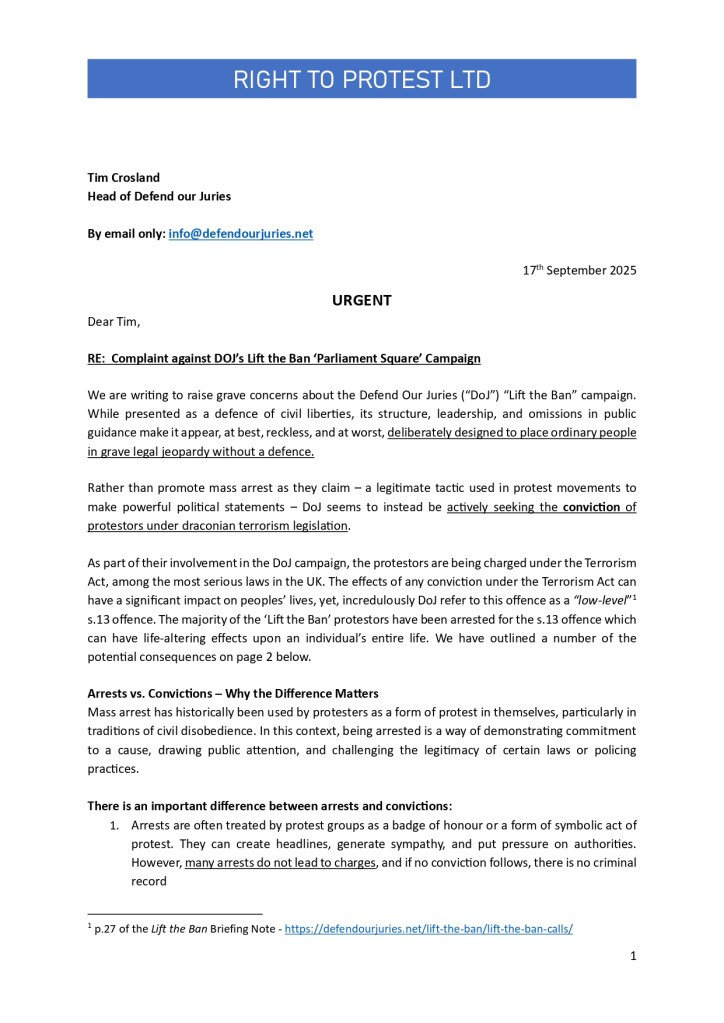
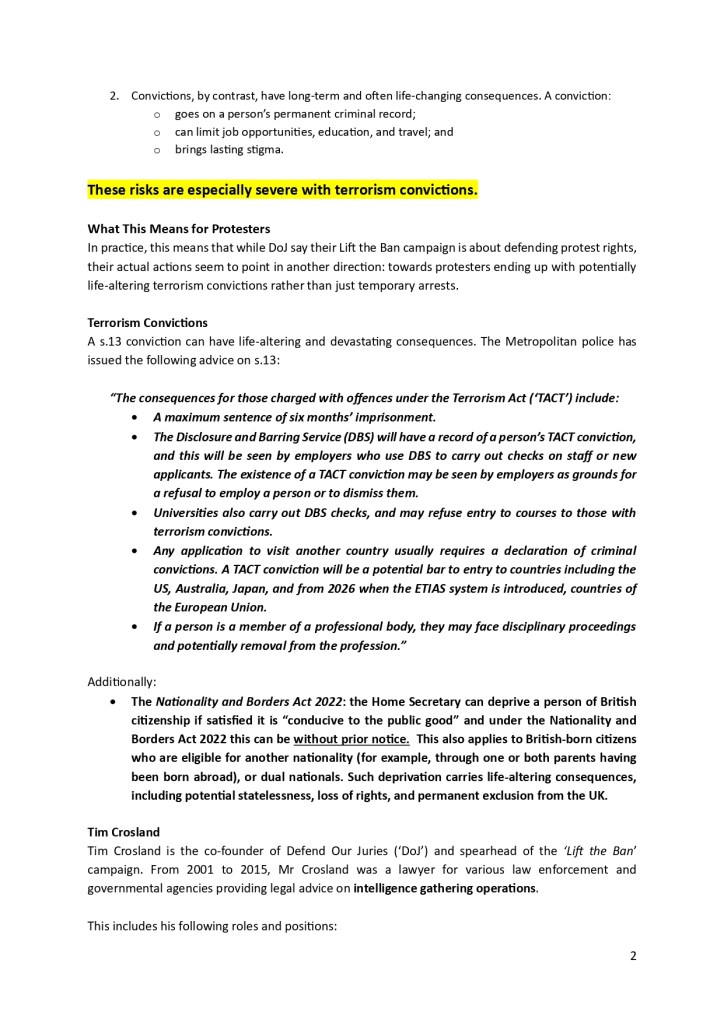
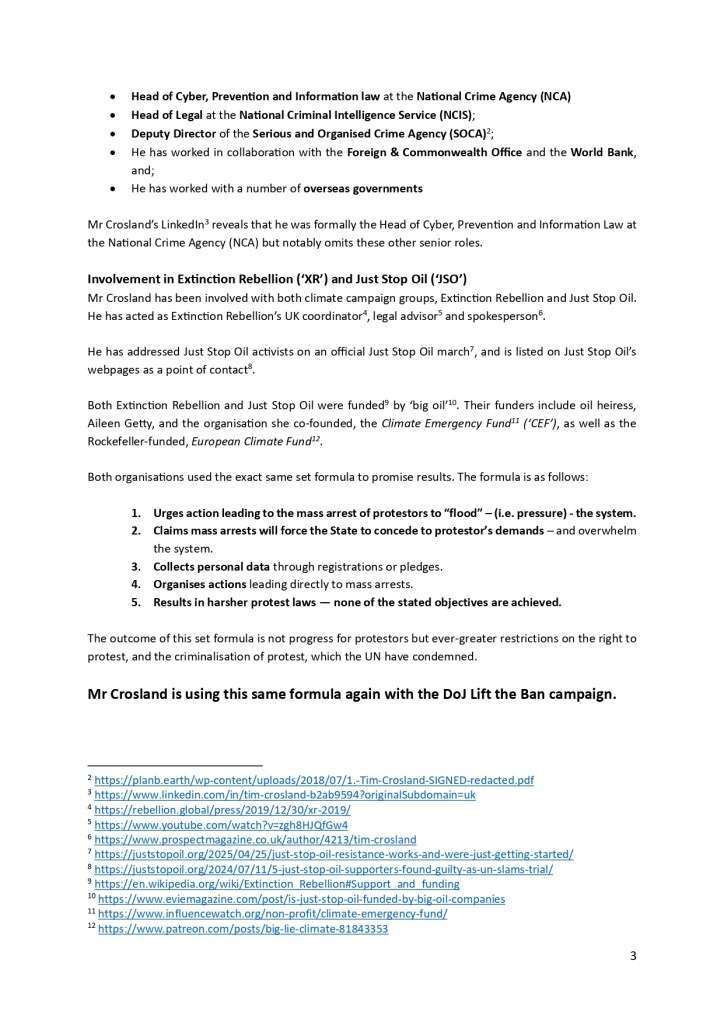
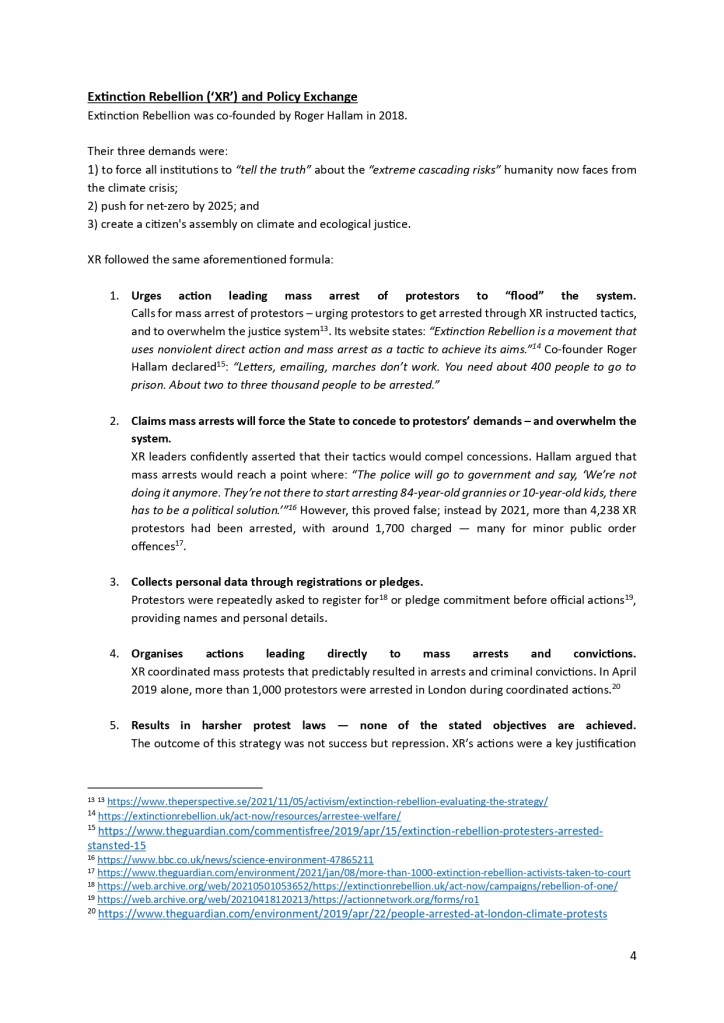
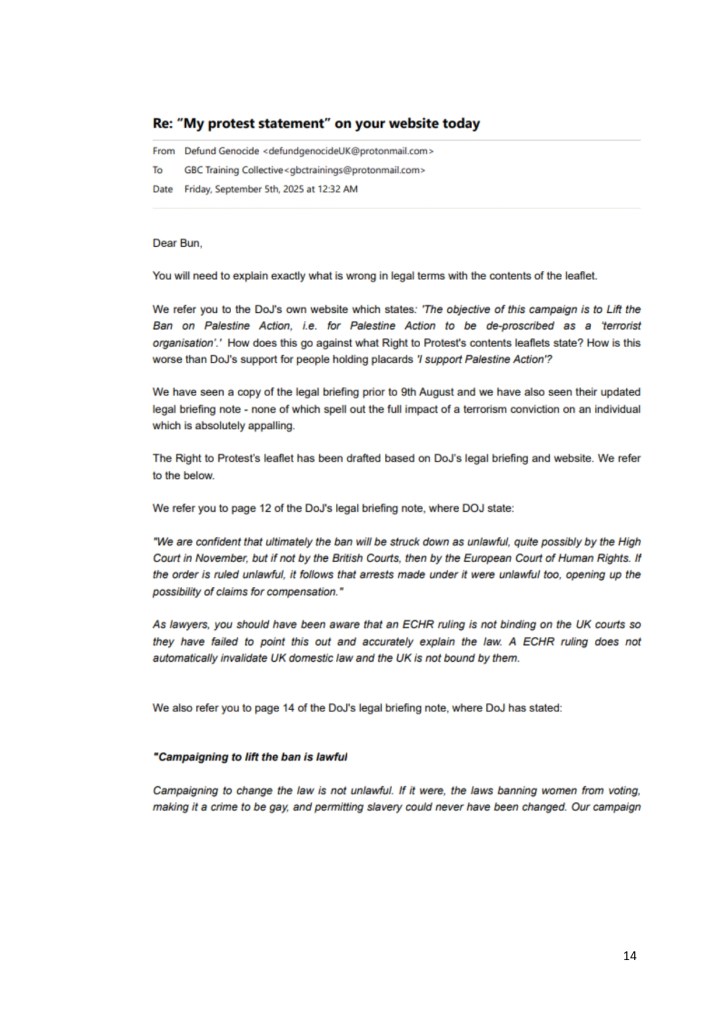
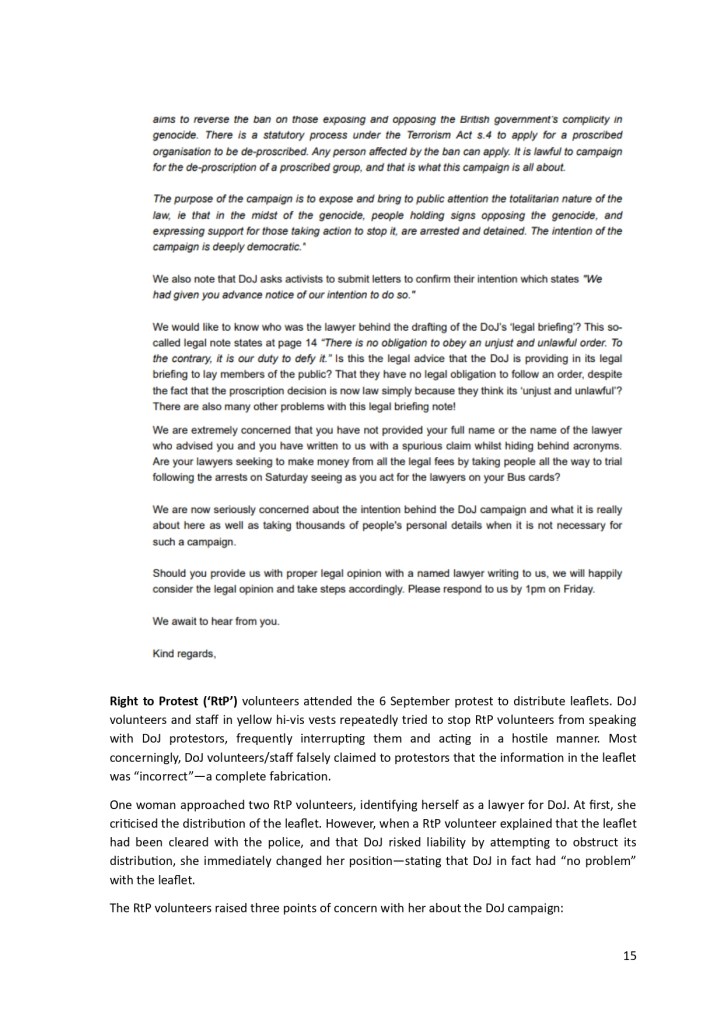
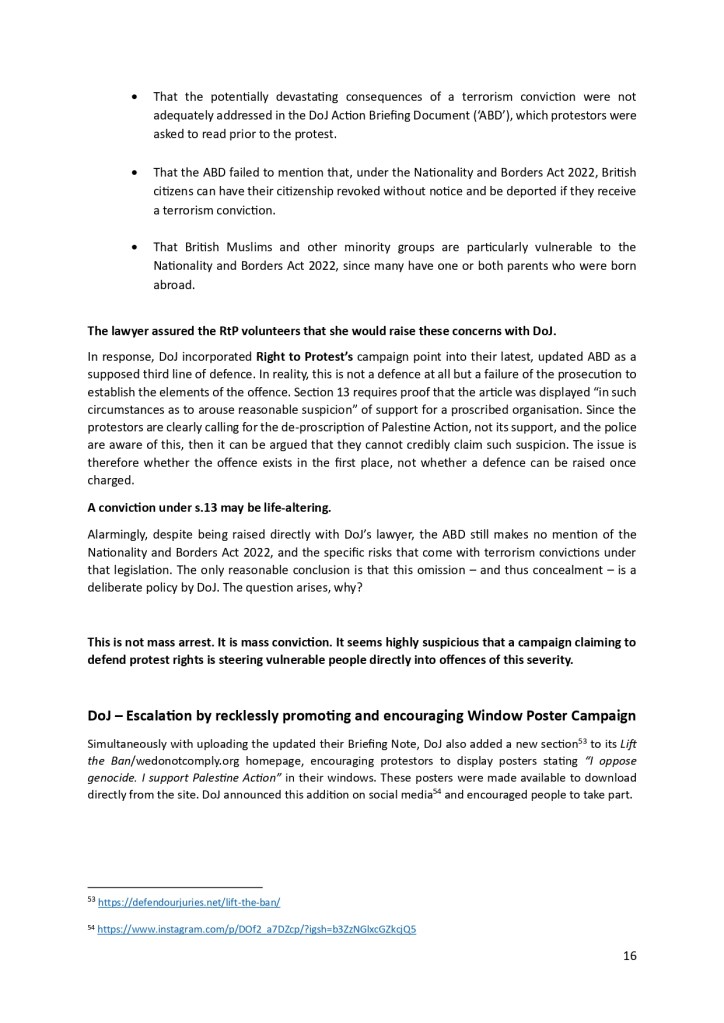
It is with these concerns that Right to Protest wrote to Tim Crosland, co-founder of Defend Our Juries on 17 September 2025, shortly after the beginning of the Lift the Ban Parliament Square campaign. As well as being co-founder of Defend Our Juries, Tim Crosland has been involved with both Extinction Rebellion and Just Stop Oil, part of the A22 Network funded by the CIA-affiliated Climate Emergency Fund. He previously acted as a government lawyer, working in British intelligence.
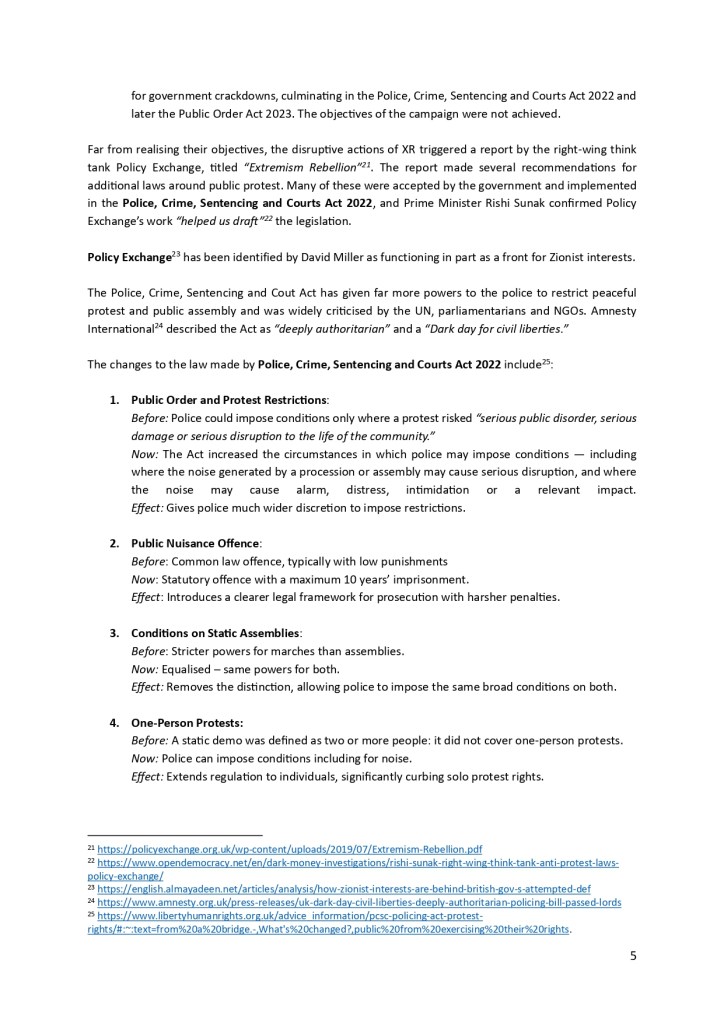
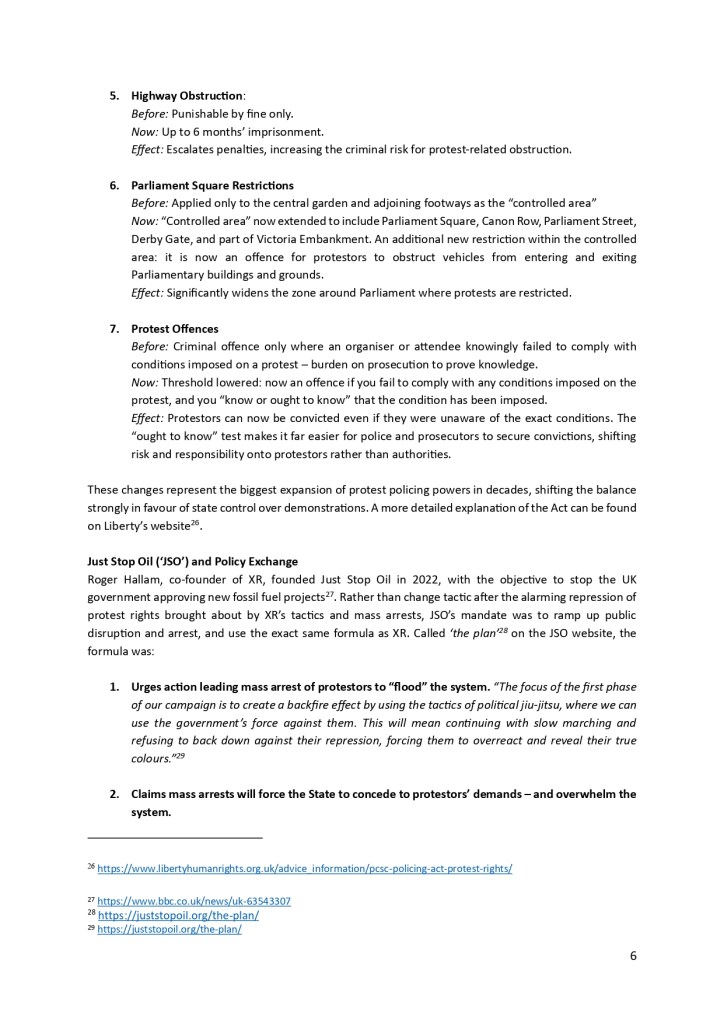
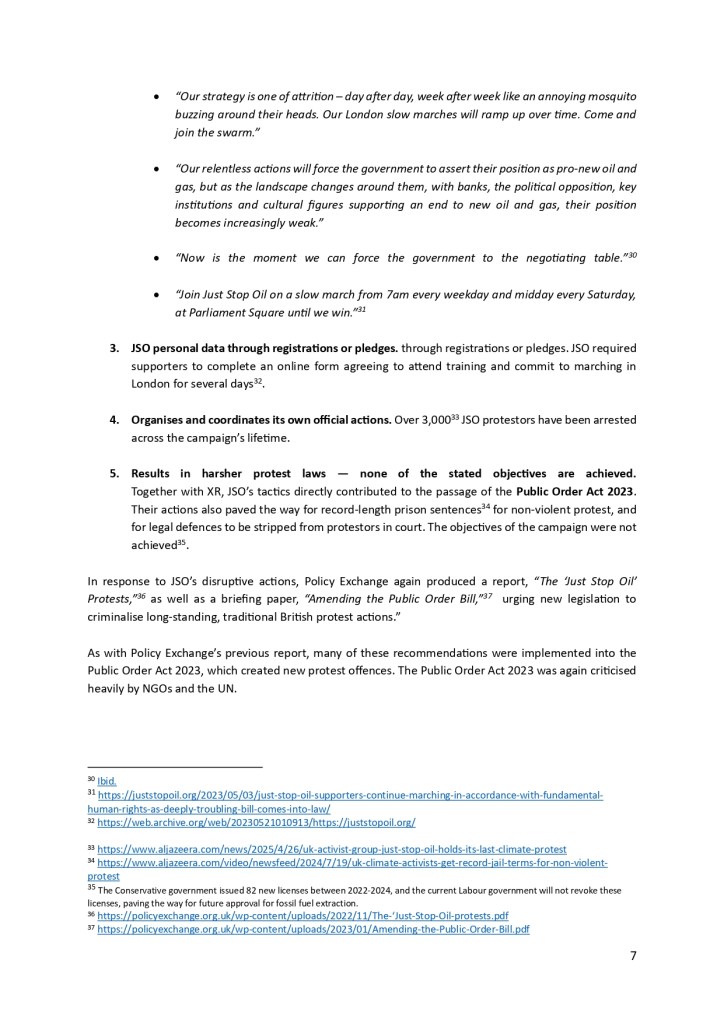
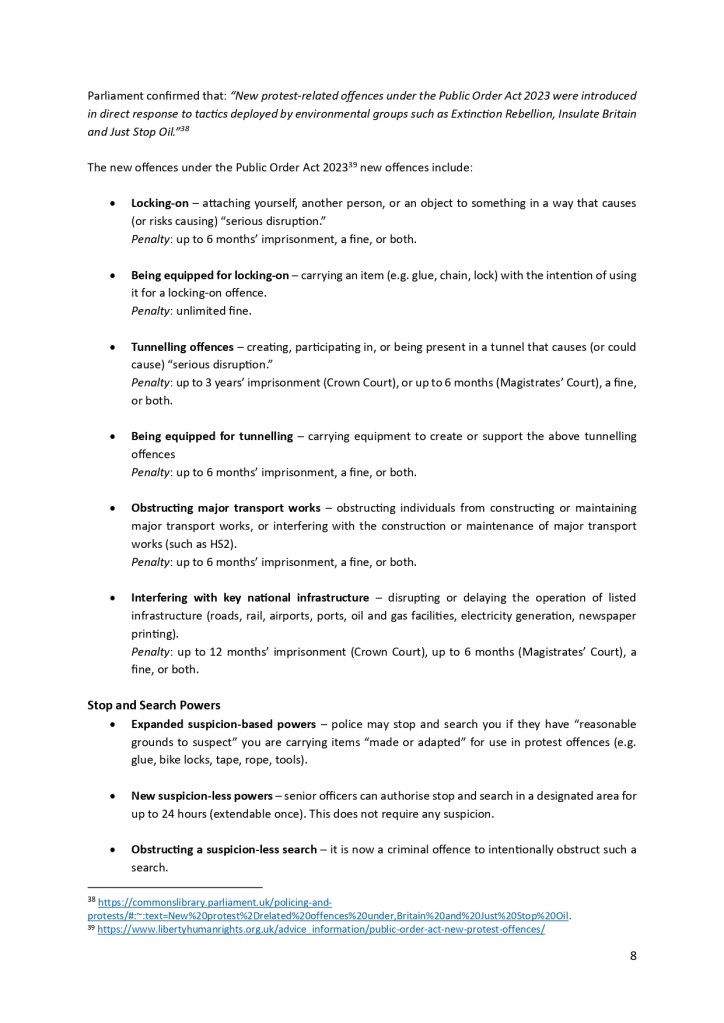
The letter is produced in full below. We highly recommend reading it in full as it provides a comprehensive summary of Tim Crosland’s background and the groups he has been involved in, and the consequential suppression of protest rights in the UK as the direct result of the actions of those groups.
As of date (13.04.2026) Right to Protest has received no reply to this letter.
(Click on the first icon below to open up the full-size letter)
 Right to protest Ltd